|
Cracks in Crypto’s Tax SystemDaniel FuschJanuary 12, 2026 Janna Scott discovered the problem the way most people discover structural flaws: by accident, and then by obsession. It was late 2021, and Scott—a former government fiscal analyst who’d spent years reviewing Treasury reports and compliance audits—was doing something millions of Americans were attempting that year: filing taxes on cryptocurrency trades. Her wallet contained roughly 300 transactions. Nothing extraordinary by crypto standards. A few trades, some DeFi experiments, the digital equivalent of a moderately active portfolio. She ran her data through one of the popular crypto tax platforms. Got her numbers. Then, more out of professional habit than suspicion, she ran the same wallet through a second platform. The results didn’t match. So she tried a third. Then a fourth. Fourteen platforms in total—essentially the entire landscape of crypto tax software available to American taxpayers. Not one produced the same result. One platform reported tens of thousands in taxable income. Another showed a capital loss. The variations weren’t marginal—they were fundamental disagreements about the same financial reality, derived from identical data, with no explanation for the contradictions. “It wasn’t noise in the data,” Scott says. “It was the math itself that was broken.” For most people, that discovery would have prompted a call to an accountant and a decision to pick the most conservative estimate. For Scott, whose career had been built on identifying exactly these kinds of systemic vulnerabilities, it was an invitation to look deeper. The Architecture of Error
What followed was a nine-month investigation that unfolded with the methodical precision of academic research and the urgency of a detective story. Scott went to the source: the blockchain itself. She began manually validating thousands of transactions, pulling raw data directly from distributed ledgers, checking cost basis calculations, timestamps, token movements line by line. She developed her own APIs to bypass the CSV files exported by exchanges—files that, she discovered, often served as the shaky foundation for most tax software—and instead retrieved immutable records directly from the chain. The patterns that emerged were troubling. The same wallet produced tax liability swings exceeding $25,000 depending on which platform processed it. Coinbase might report significant taxable income while a partner tax service showed a loss on identical data. In some cases, routine transfers between a user’s own wallets were being classified as taxable sales, creating what the original article describes as “phantom income”—tax obligations on transactions that never actually occurred. More concerning still: Scott found that many platforms allowed users to edit core transaction data. “These platforms allow users to edit the date, time, value, and currency of a blockchain transaction,” Scott explains. “The moment you do that, the audit trail is gone.” The implications extended beyond individual tax returns. This was infrastructure failure at the foundation of an emerging asset class. Scott brought her findings to federal regulators. In March 2023, the IRS quietly suspended crypto audits after reviewing her research and concluding that their CSV-based audit methodology was unreliable. Universities were brought in to peer-review Scott’s analysis. The conclusion held: none of the fourteen platforms tested could consistently produce accurate tax reports from blockchain data. The Growing Divide While regulators paused to reconsider their approach, cryptocurrency adoption continued its upward trajectory. Approximately 6 million Americans reported crypto on their 2023 tax returns—roughly double the previous year. Meanwhile, through exchange subpoenas and transaction records, the IRS maintains data on nearly 50 million U.S. residents who have interacted with cryptocurrency at some point, whether they’ve reported it or not. Scott describes this widening gap between regulatory visibility and reporting accuracy as a “tax time bomb.” “Crypto evolved,” she says. “Tax software didn’t.” Most crypto tax platforms, she explains, were designed for straightforward transactions: buying and selling digital assets. But decentralized finance introduced complexity those systems weren’t built to handle—liquidity pools, cross-chain bridges, wrapped assets, staking rewards, yield farming. The old categorical logic doesn’t accommodate the new financial behaviors. CSV exports from exchanges frequently lack essential data: timestamps, transaction hashes, accurate pricing information. Software fills the gaps with assumptions. And assumptions, in tax reporting, create liability. “Automation without transparency is just a faster risk,” Scott says. After presenting her findings to the fourteen companies whose platforms she’d tested, ninety percent declined to address the structural issues she’d identified. That response—or lack thereof—prompted Scott and her team to build an alternative. Designing for Scrutiny DeFi Tax launches publicly this month with a different foundational premise. It doesn’t accept user-edited spreadsheets. Instead, it retrieves raw, timestamped transaction data directly from blockchains and exchanges, structures it into a transparent audit trail, and generates reports that can be traced and verified line by line. “Run the same wallet twice, you get the same answer twice,” Scott says. “That’s not a feature. That’s the baseline for compliance.” The platform is designed for users with complex on-chain activity—DeFi participants, crypto founders, decentralized organizations, and the accounting professionals who serve them—who need more than speed or simplicity. They need audit readiness: documentation that explains exactly how every calculation was derived and can withstand professional scrutiny. “Audits don’t ask which tool you used,” Scott says. “They ask how you calculated your numbers.” With the IRS preparing to expand digital asset reporting requirements and new 1099-DA forms on the horizon, Scott believes the industry is entering a new phase—one where trust-based assurances are no longer sufficient for software handling tax obligations. Transparency as Design Principle There’s a particular irony in Scott’s work. Cryptocurrency’s foundational promise was transparency—immutable public ledgers, cryptographic verification, systems designed to operate without requiring trust in centralized authorities. Yet when it came to the practical task of accounting for activity on those transparent ledgers, the industry largely defaulted to opaque tools that couldn’t explain their own calculations. “Most people aren’t trying to avoid crypto taxes,” Scott says. “They’re trying to understand them.” Her research suggests that the barrier to compliance isn’t willful evasion—it’s infrastructure inadequacy. People using flawed tools to meet complex obligations they don’t fully understand, in an emerging regulatory landscape that’s still taking shape. DeFi Tax’s public launch arrives at a moment when that understanding is becoming essential. As regulators prepare to resume audits and millions of Americans face increasingly sophisticated reporting requirements, Scott’s work offers something that’s been notably absent: clarity derived from verifiable calculation. “Chaos is optional,” she says. “Clarity is a design choice.” For an ecosystem that built its identity on transparency and trustless verification, it may be the most important design principle of all. Those seeking transparent, blockchain-verified tax reporting can find DeFi Tax at https://defitax.us
0 Comments
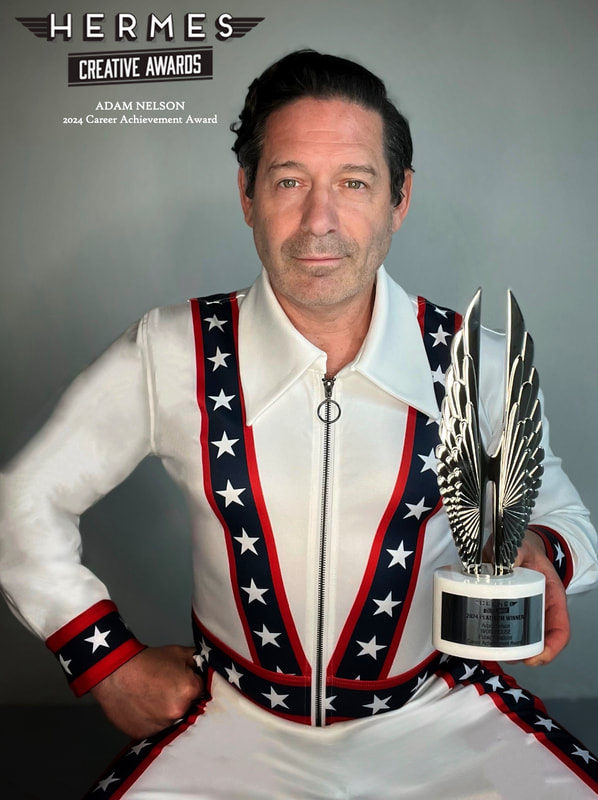
An Anniversary message from Workhouse, Founder & CEO, Adam Nelson:
"Fifteen years on Fiverr and walking through those doors still feels like stepping into the engine room of the modern creative economy. What began as a scrappy experiment for so many has grown into a global force — a place where ideas scale, independents thrive, and the old rules quietly collapse. I’ve watched Fiverr evolve from a frontier into an ecosystem. A marketplace into a movement. And somehow, every year, it keeps proving that collaboration — real collaboration — is still the most powerful currency in our industry. Workhouse was built on that same belief. Vision meets grit. Talent meets opportunity. People find each other and build something larger than themselves. That’s why being part of Fiverr’s story for more than a decade has never felt like a transaction — it’s been a partnership in momentum. Standing there today, I was reminded why I embarked in the first place: the platform remains one of the few places where the future of work isn’t theorized. It’s practiced. Daily. Here’s to the builders, the doers, the independents, the ones rewriting how the world works together. And to the next chapter — because the climb hasn’t slowed. It’s only grown steadier." New Jersey Film Academy
proudly presents Breaking In Lecture Series with ARMAND ASSANTE Join us for an evening with this award-winning actor. Learn how he entered the world of storytelling and remains in iconic films such as Gotti The Mambo Kings American Gangster Private Benjamin and currently in Revival Don’t miss this special opportunity to ask your questions and experience a night with this Hollywood icon. Wednesday, January 28, 2026 @ 6:30pm Brookdale Community College Navesink Room, Student Life Center Parking Lot 7 765 Newman Springs Road Lincroft, NJ 07738 Breaking In Moderator: County Commissioner Director Thomas Arnone To RSVP: Call Daniel Colaianni 732-224-2683 or email [email protected] Tickets are $25 *FREE for Brookdale Students MEDIA: If you have interested in interviewing Armand Assante, media please contact Workhouse, CEO, Adam Nelson [email protected] New Jersey Film Academy Where the best in the biz begin Partner Colleges: ATLANTIC CAPE CC, BROOKDALE COMMUNITY COLLEGE, CAMDEN COUNTY COLLEGE, COUNTY COLLEGE OF MORRIS, ESSEX COUNTY COLLEGE, HUDSON COUNTY CC, MERCER COUNTY CC, MIDDLESEX COLLEGE, RAITAN VALLEY CC, ROWAN OF SOUTH JERSEY, UNION COLLEGE OF UNION COUNTY inside the historic halls of the Jersey Shore Arts Center, a sold-out crowd gathered for the AP'N3 Film Premiere Screening!— an evening that felt less like competition and more like communion.
Ten finalists from the On Location category — novice, emerging, and professional filmmakers — stood shoulder to shoulder, each given the same creative constraints: a theme, a prop, a line of dialogue, and a city. And yet, from those identical sparks came wildly different fires. Subversive. Humorous. Caustic. Dramatic. Heartbreaking. Together, they formed a kaleidoscopic love letter to City of Asbury Park— a olace that never stops inspiring reinvention. Deep gratitude to the Asbury Park Arts Council and the festival’s founders for building this cinematic playground — a space where constraint becomes catalyst, and storytelling thrives in all its raw, local glory. For me, it was an honor to share this night, and this film, with my family — my father- and mother-in-law, my beloved Nicole, our baby Viva, and cousin Jessica — all of whom appear onscreen. To create something personal, then witness it projected among this community of dreamers, is the rare kind of full-circle only film can offer. None of it exists without Gary Hanna — the director, editor, and cinematographer whose eye finds poetry in desolation and light in wreckage. His precision gave Food for Thought its pulse. So tonight, as we release the full three-minute film publicly for the first time, I’m reminded that filmmaking is still alchemy — the collision of chaos and will, of patience and faith. Food for Thought — written & featuring Adam Nelson Directed, edited & cinematography by Gary Hanna Music by Adam Nelson in collaboration with ElevenLabs Cast includes Nicole Abbruzzese Nelson, Jan Abbruzzese, Edmondo Abbruzzese, Jessica Abbruzzese, and introducing Viva June Presented by the Asbury Park Arts Council For those who couldn’t make it — here it is. Our small, salt-rusted dream on film. #FoodForThought #APN3FilmChallenge #AsburyPark #ShortFilm #IndependentFilm #Workhouse #AdamNelson #GaryHanna #FilmPremiere #AsburyParkArtsCouncil #SupportPublicArt Twenty-five years ago, I started WORKHOUSE with more heart than sense. Today, I ran the Rocky Race in Philadelphia — my first in over a decade, in the city where I learned to believe impossible things before breakfast.
My feet are troubled. The years have their say. But standing at that starting line, I understood something Rocky Balboa knew all along: the finish line isn’t the point. The distance is. Every uphill mile reminded me of what entrepreneurship actually costs. Not the sanitized LinkedIn version — the real one. The one where you’re alone at 3 AM, where the numbers don’t work, where your body says stop and something deeper says *not yet*. Where belief isn’t a motivational poster but a decision you’ve make in the dark, over and over, when no one’s watching. I wore bib 1032. Ran with “Gonna Fly Now” in my ears and twenty-five years of falls and climbs in my legs. I’m not remotely close to an Italian Stallion — I’m more Mick these days. But maybe that’s the whole lesson: we all become Mick eventually, if we’re lucky enough to stay in the ring that long. The collegiate streets of Philadelphia held me differently this time. Less certainty, more scars. But something else too — a harder-earned faith that you can do anything for thirty minutes. That you can do it uphill. That the work is the reward, and the distance is the destination. We don’t run to win. We run to prove we still can. We build companies not to arrive, but to become who the journey demands we become. Eyes forward. Never on the finish line. The distance is everything. hashtag#Entrepreneurship hashtag#Leadership hashtag#Resilience hashtag#SmallBusiness hashtag#EntrepreneurLife hashtag#NeverGiveUp hashtag#Philadelphia hashtag#25Years hashtag#Motivation hashtag#PersonalGrowth "Food For Thought" Adam Nelson & Gary Hanna's Sizzling Short Moves to Finals of AP'N3 Film Contest10/7/2025 Adrift on the Asbury Park Boardwalk, a half-starved sailor searches for scraps — of food, memory, and meaning. Sun-struck and drifting between hallucination and history, he wanders through the ruins of a world that left him shipwrecked.
That’s Food for Thought — a surreal, salt-rusted meditation on hunger, erasure, and the price of progress. Created for the AP’N3 Film Challenge by the Asbury Park Arts Council, Asbury Park’s fiercely inventive three-week filmmaking competition, the project was built under pressure: three minutes, one city, one chance to make it count. On Day One, each team received a theme, prop, line of dialogue, and location — the only ingredients allowed. In the On Location category, every frame had to be filmed entirely within Asbury Park’s borders, transforming the city itself into both subject and character. We’re honored that Food for Thought has been named a Finalist, one of the top selections advancing to the festival premiere, where both the jury awards and the Audience Award will be decided live. Join us for the premiere: Sunday, November 9 Jersey Shore Arts Center, Ocean Grove, NJ Tickets $17.85 Visit: https://www.eventbrite.com/e/apn3-film-challenge-premiere-tickets-1670935034669?fbclid=IwY2xjawNSWQ9leHRuA2FlbQIxMAABHkDUptnmrAYaRCwBmS-K-wyDG1zTbI8EavyQkwnauTXl2OZA_6fv9ppswaJE_aem_4Ei3hDYkS1HNu-wQO6GR-g Written & Featuring Adam Nelson Directed, Edited & Cinematography by Gary Hanna Original Music by Adam Nelson in collaboration with ElevenLabs Food for Thought — a film about hunger, memory, and what survives the wreck. #FoodForThought #APN3FilmChallenge #AsburyPark #ShortFilm #IndependentFilm #GaryHanna #AdamNelson #Workhouse #FilmFinalist #Premiere Film Asbury Park In January 2026, journalist and breast cancer survivor Erica Rex will release a memoir that refuses to celebrate the psychedelic renaissance without interrogating its shadows. Seeing What Is There: My Search for Sanity in the Psychedelic Era, distributed by Simon & Schuster, arrives at a moment when psilocybin and MDMA are moving toward FDA approval, investment is flooding psychedelic startups, and millions are looking to these substances as potential cures for depression, PTSD, and addiction.
But Rex, one of the first patients in the Johns Hopkins psilocybin trials, insists this is not another utopian tale of magic mushrooms and healing retreats. Instead, she offers what early reviewers are calling one of the most unflinching accounts of the modern psychedelic movement to date.When asked what made her decide to write the book, Rex points to a devastating moment: “I realized I had to write this book when I learned my younger sister, Andrea, was dying of colon cancer, in 2004. She died in 2005.”As a child of no more than five, Rex had experienced a premonition that either she or her sister would die young. When that premonition came true more than forty years later, Rex says she fell apart. The sisters had been separated for 17 years because of their parents’ methodical destruction of Rex’s relationships with her siblings. “Writing about what happened was my way of trying to put her death in context,” Rex explains. “I felt that I failed her. I couldn’t remake the story, but I could try to make some sense of what had happened, and perhaps provide insight so that others could awaken — if they so choose — to these patterns in their own families — and of course the society! — before it is too late.”Rex’s answer is unequivocal: “Absolutely. My parents’ toxicity and the toxicity of the intergenerational secret they staked their lives on hiding caused my sister’s death. Everything they touched died. She was, however, the wrong child. I was supposed to be the one who died, but I escaped. I’ve paid for my life mentally and physically ever since.” Rex’s credentials as a science journalist are formidable — she has written for The New York Times, Scientific American, The Independent, and others, and is a National Magazine Award winner for fiction. But her authority on trauma comes from a more harrowing source: she is the daughter of two psychiatrists, and her mother trained under Harvard psychologist Dr. Henry A. Murray, whose experiments helped shape Ted Kaczynski, the Unabomber. As a child, Rex endured violent psychiatric “treatments” that left her with Complex PTSD. She describes herself as the family scapegoat, explaining that her siblings were not as severely or violently abused and weren’t scapegoated. “I was the target which meant they were spared in many ways. They had a built-in fall guy. I was the family problem.” Her siblings, she says, did what authoritarian personalities do: “They allied and identified themselves with the abusers. They engaged in victim blaming.”“What is it about telling the truth everyone hates so much?” Rex asks, then answers: “The truth teller — the maverick sees patterns and detects undercurrents. She or he has creative ways of moving through the world which upset assumptions and norms. We are dangerous to the status quo. Left to tell our stories, paint our pictures, make our music, lead social movements, we’re kryptonite to familial and societal cults.” On premonitions and clairvoyance, Rex is matter-of-fact: “Like it or not, these qualities exist, and some people are cursed with them. This is not a ‘gift.’ I don’t choose the times, places or people about whom these insights occur. Mostly, they are about family members or close friends, but not always. The insights arrive fully formed, like facts. They can’t be ignored. They are very different from other mental processes, like thoughts or fantasies.”In 2012, as a breast cancer patient grappling with depression, Rex entered Johns Hopkins’ clinical trial and received psilocybin-assisted therapy. She later chronicled that experience for Scientific American Mind in her widely read essay “Calming a Turbulent Mind.” But in Seeing What Is There, she situates that pivotal moment within a much larger struggle. The book argues that healing requires more than pharmacology. Molecules like psilocybin, MDMA, ayahuasca, and 5-MeO-DMT can trigger powerful states, but without community, ethical support, and economic safety, they risk becoming just another arm of the psychopharmaceutical industry.Joe Moore, Co-Founder and CEO of Psychedelics Today, writes: “This important memoir critiques psychiatry and the psychedelic movement, exploring trauma, healing, and the ethical challenges of contemporary psychiatry. Through her journey with psilocybin, MDMA, and 5-MeO-DMT, Erica Rex reveals the promise of transformation while advocating for a future where true healing includes social support, equity, and community. Students of psychedelics and psychiatry would do well to read this book.” Asked how she would change the way depression and PTSD are diagnosed and treated, Rex draws a sharp distinction: “Depression is one thing — it has several possible causes, and in some cases can be treated either pharmaceutically or through interpersonal therapeutic interventions. PTSD will not be curable until the trauma-inducing institutions, cultural norms and value systems that nurture it are vanquished.”She argues that most social structures and institutions in the US now cultivate malignant narcissism, along with a nihilistic, transactional worldview. “The western economic system is based entirely on money and the ability to accumulate wealth through any means,” she writes. “Nothing that makes us human is valued: the pursuit of learning, appreciation of aesthetics, mastery of an art form, wisdom, compassion or seeing the intrinsic value in the natural world.” When asked about her focus on malignant narcissism, Rex is blunt: “I have never met anyone — or heard of anyone — who suffers from schizophrenia who has, or could destroy people, societies or entire ecosystems. Same with bipolar disorder and obsessive-compulsive disorder. Those who live with these disorders harm themselves and if they harm others, it tends to be unintentional. Malignant narcissism is a world-destroying virus.”On whether everyone should do psychedelics at least once, Rex emphasizes nuance: “I’ve tried to emphasise that the beneficial use of psychedelics is context-specific. Even in recreational use, the quality of the experience is entirely dependent on context, whom you’re with, what challenges you’re facing and your own capacity to engage with and be self-reflective about the experience.” The book also recovers forgotten history, detailing how psilocybin first came to the Western world through research at the French Museum of Natural History, with the first clinical trials conducted in the late 1950s at the main mental hospital in Paris. With approximately 13 million Americans suffering from Complex PTSD and 1.6 billion children worldwide regularly facing violence at home, Rex’s work addresses struggles that are both widespread and urgent. Stephen Mills, author of Chosen: A Memoir of Stolen Boyhood, calls it “an extraordinary, beautifully written account of one woman’s lifelong journey out of unimaginable childhood trauma… Hers is a singular and prophetic voice, summoning the healing power of community in a culture that has pathologized human suffering.” Seeing What Is There will be available in trade paperback for $17.99 and as an ebook for $12.99 through major retailers and fine bookstores everywhere. Jordan French Jordan French has been verified by Muck Rack's editorial teamJournalist verified by Jordan French is the Founder and Executive Editor of Grit Daily Group , encompassing Financial Tech Times, Smartech Daily, Transit Tomorrow, BlockTelegraph, Meditech Today, High Net Worth magazine, Luxury Miami magazine, CEO Official magazine, Luxury LA magazine, and flagship outlet, Grit Daily. The champion of live journalism, Grit Daily's team hails from ABC, CBS, CNN, Entrepreneur, Fast Company, Forbes, Fox, PopSugar, SF Chronicle, VentureBeat, Verge, Vice, and Vox. An award-winning journalist, he was on the editorial staff at TheStreet.com and a Fast 50 and Inc. 500-ranked entrepreneur with one sale. Formerly an engineer and intellectual-property attorney, his third company, BeeHex, rose to fame for its "3D printed pizza for astronauts" and "I was proud to serve as the inaugural public relations director for the Asbury Park Boardwalk whose task was to uplift the image of this historic sun-soaked town. What began as an effort to polish a fading seaside has since unfurled into a cultural tide.
Now known as “Brooklyn on the Beach,” Asbury carries both its scars and its saints — the place where a hometown hero named Bruce Springsteen turned Greetings from Asbury Park into a launchpad for the American dream. Yet the city hasn’t froze in vintage arcade amber. It keeps moving, restless as the waves that define it. This accolade stands as testament not only to the those whose names still echo across the avenues, but also to the local legends — the bricklayers, the artisans, the musicians, the steadfast talents who never let go. It is upon their shoulders that Asbury’s title as “Best Small Town in America” should rightly be bestowed. Today Asbury is not simply remembered; it’s alive — a twisted carnival of cool, buzzing with modern mystic. Proof that a boardwalk is more than planks on sand. It’s spirit, it’s spectacle, it’s survival."-- Adam Nelson, CEO, Workhouse New Jersey Film Academy proudly welcomes award-winning industry veteran Adam Nelson as the instructor of our summer course, teaching "Script to Screen: Introduction to the Entertainment Industry."
Designed for aspiring creatives ready to launch their careers, this in-depth course explores every stage of the production pipeline—from script development to on-set safety protocols. Students will gain real-world tools, industry insight, and career-shaping knowledge to thrive in film and television. With decades of experience behind major productions, Nelson brings unmatched insight and real-world tools to help you launch your career. Class: July 7 – August 28, Monday & Thursday 9 am – 12 pm. Course Code: XFILM-001. Cost: $375 Call to register: +732.224.2683 Location: Brookdale Community College To learn more, visit: https://www.brookdalecc.edu/.../nj-film-academy-programs |
WORKHOUSE
THE HOUSE THAT WORK BUILT. Archives

January 2026
|
RSS Feed